

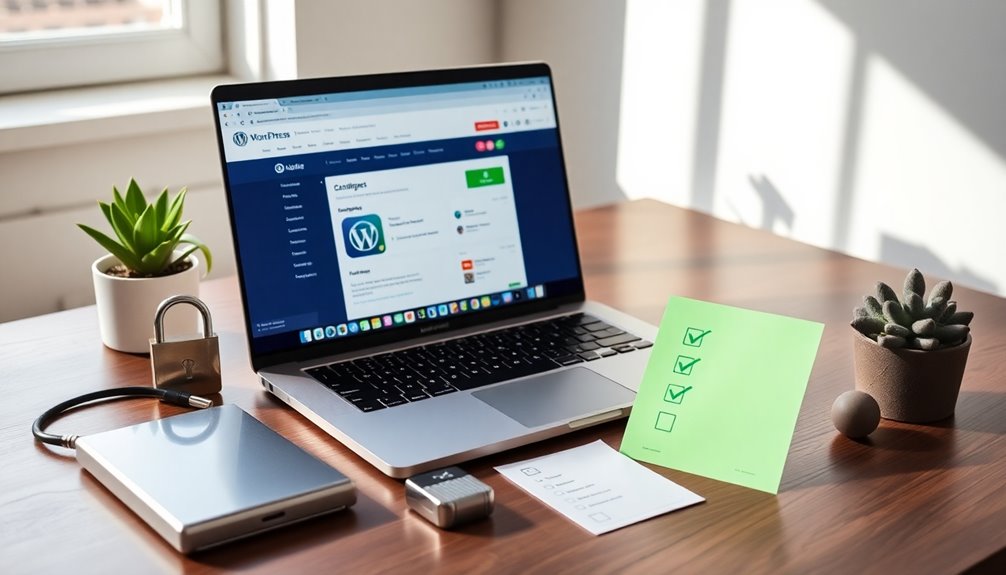
To harden your WordPress security after a fresh install, start by using strong passwords and assigning user roles wisely. Keep everything updated—WordPress, themes, and plugins—to patch vulnerabilities. Install a reliable security plugin and implement two-factor authentication for extra protection. Secure your wp-config.php file, set proper file permissions, and disable directory listing and file editing. Don’t forget to schedule regular backups and monitor your site for unusual activity. There’s plenty more to explore to keep your site safe!
Choose Strong Passwords and User Roles
When it comes to securing your WordPress site, choosing strong passwords and defining user roles are essential steps.
Start with password complexity; aim for at least 12 characters, mixing uppercase letters, numbers, and symbols. Avoid common words or easily guessable information. Use a password manager to keep track of these robust passwords safely.
Aim for strong passwords with at least 12 characters, using a mix of letters, numbers, and symbols for enhanced security.
Next, focus on role management. Assign specific roles to users based on their responsibilities, limiting access to sensitive areas.
For instance, only grant admin privileges to trusted individuals, while editors and contributors should have restricted capabilities. This way, you minimize the risk of unauthorized changes or data breaches. Additionally, consider implementing Two-Factor Authentication to further enhance security by requiring a second verification step during logins.
Keep WordPress, Themes, and Plugins Updated
To safeguard your WordPress site, regularly update WordPress, themes, and plugins. Keeping everything current not only enhances security but also improves theme compatibility and plugin performance.
Developers constantly release updates to patch vulnerabilities and optimize features. Failing to update can leave your site exposed to threats or lead to conflicts that disrupt its functionality.
You can enable automatic updates for minor WordPress releases, but make certain to check for major updates manually. Similarly, review your themes and plugins regularly, and remove any that you no longer use. Regular updates are a crucial component of data loss prevention strategies to ensure your site’s integrity.
Install a Reliable Security Plugin
When it comes to securing your WordPress site, installing a reliable security plugin is vital.
You’ll want to explore top security plugins and understand the essential features they offer.
This way, you can choose the best option to protect your website effectively. For instance, consider plugins that provide malware scanning tools to ensure continuous protection against potential threats.
Top Security Plugins Overview
Choosing the right security plugin can make a significant difference in your WordPress site’s safety. When you’re evaluating options, consider a security plugins comparison to identify which features best meet your needs.
Popular choices like Wordfence, Sucuri, and iThemes Security offer robust protection, but they vary in scope and usability.
Before settling on a plugin, be mindful of potential plugin compatibility issues. Some plugins might conflict with your current theme or other installed plugins, leading to performance problems or vulnerabilities.
Always check user reviews and support forums for insights into compatibility. By taking the time to choose wisely, you can enhance your site’s security and minimize risks effectively.
Essential Features To Consider
While selecting a reliable security plugin, it’s crucial to focus on essential features that directly impact your site’s protection. Look for plugins that offer real-time monitoring and automated backups, as these are critical for maintaining security best practices.
A strong firewall is another must-have, shielding your site from malicious attacks. Additionally, consider plugins that provide malware scanning and removal capabilities, ensuring your site stays clean and secure.
Two-factor authentication adds an extra layer of protection, making it harder for unauthorized users to gain access.
Implement Two-Factor Authentication
Strengthen your WordPress security by implementing two-factor authentication (2FA). This added layer of protection requires users to verify their identity through various authentication methods, enhancing overall security.
You can choose from security plugins that streamline the setup process, but be mindful of potential implementation challenges. Mobile verification is a popular option, sending codes directly to your phone. For those looking for advanced security, consider biometric options like fingerprint recognition.
Don’t forget to develop backup strategies in case of lost access. User education is essential; make sure everyone understands how 2FA works to improve their experience. Additionally, consider the importance of proactive security measures to shield your site from potential threats.
Secure Your Wp-Config.Php File
To enhance your WordPress security, securing your wp-config.php file is essential since it contains sensitive information like database credentials and security keys.
Here are four steps to help you do just that:
- Set Secure File Permissions: Change permissions to 440 or 400 to limit access.
- Move wp-config.php: Place it one directory level up from your WordPress root for added protection.
- Encrypt wp-config.php: Use encryption tools to obscure sensitive data, making it harder for attackers.
- Regular Backups: Verify you have recent backups to restore your site if your wp-config.php is compromised.
Change the Default Admin Username
Changing the default admin username is essential for enhancing your WordPress security.
A unique username makes it harder for attackers to guess your login credentials. Additionally, implementing strong, unique usernames can significantly reduce the risk of unauthorized access to your site.
Let’s look at the steps to change your username and strengthen your site’s defenses.
Importance Of Unique Username
While it might seem like a minor detail, using a unique username can greatly enhance your WordPress security. Default usernames, like “admin,” are easy targets for hackers. By choosing a distinctive username, you’re taking an essential step in protecting your site.
Consider these username variations:
- YourName + Year (e.g., JohnDoe2023)
- Hobby + Initials (e.g., GuitaristJD)
- Favorite Animal + Birth Month (e.g., CatJuly)
- Username Generators can help you brainstorm creative options.
These variations not only make it harder for attackers to guess your login but also add an extra layer of complexity.
Steps To Change Username
Choosing a unique username is just the beginning of enhancing your WordPress security.
To change your default admin username, first, log in to your WordPress dashboard. Navigate to “Users” and select “Add New.” Create a new user with a unique username, strong password, and assign it an appropriate user role based on your needs.
Once the new user is set up, log out and log back in with the new credentials. After verifying everything works, go back to “Users,” find the original admin account, and delete it.
Remember to check username visibility settings, as this can impact your site’s vulnerability. By effectively managing user roles, you can greatly boost your WordPress security.
Set Proper File Permissions
To secure your WordPress site, setting proper file permissions is essential. This helps control access and protects your files.
Here’s how to manage your file ownership and permission levels effectively:
- Directories: Set to `755` to allow the owner to read, write, and execute, while others can only read and execute.
- Files: Use `644` to let the owner read and write, while others can only read.
- wp-config.php: Set it to `440` or `400` to restrict access and keep sensitive information safe.
- Uploads Folder: Make sure it’s `755` to enable uploads while maintaining security.
Additionally, maintaining effective security practices is vital to prevent potential vulnerabilities and breaches.
Disable Directory Listing and File Editing
After securing file permissions, it’s important to turn your attention to disabling directory listing and file editing. By doing this, you can prevent exploits that might arise from unauthorized user access.
To disable directory listing, add a simple line to your `.htaccess` file: `Options -Indexes`. This step limits exposure to your site’s files, enhancing privacy and protecting sensitive information.
Additionally, you should secure configurations by disabling file editing in the WordPress dashboard. Add `define(‘DISALLOW_FILE_EDIT’, true);` to your `wp-config.php` file.
This not only improves performance but also reduces the risk of unauthorized changes. Together, these actions create a more secure environment, ensuring your WordPress site remains protected from potential threats. Implementing security measures like WordPress backup plugins can further safeguard your data.
Regularly Backup Your WordPress Site
Regularly backing up your WordPress site is essential for protecting your content.
The frequency of your backups can make a big difference, so it’s important to find a schedule that works for you.
Plus, choosing a reliable backup solution guarantees you can restore your site quickly if something goes wrong. Implementing regular backup schedules tailored to your website activity ensures that you are always prepared for unforeseen disasters.
Backup Frequency Matters
While it might seem tedious, backing up your WordPress site regularly is essential for maintaining its security and integrity.
The right backup frequency can protect you from data loss due to hacks or errors. Consider these backup strategies:
- Daily Backups: Ideal for high-traffic sites or frequent updates.
- Weekly Backups: Great for blogs or sites with less frequent content changes.
- Monthly Backups: Suitable for static websites or those with minimal updates.
- On-Demand Backups: Always back up before major changes like plugin installations or theme updates.
Finding the right balance in backup frequency guarantees that you won’t lose critical data while minimizing storage costs.
Keep your site secure by implementing a consistent backup routine!
Choose Reliable Backup Solutions
Backing up your WordPress site is only as effective as the solution you choose to implement.
Consider using backup plugins that offer both local backups and cloud storage options. This way, you can maintain a secure offsite storage solution.
Look for automated solutions that allow for incremental backups, ensuring you’re only saving changes since your last backup. This minimizes storage use and speeds up the process.
Establish a backup frequency that suits your needs, ideally daily or weekly, depending on how often you update your site.
In case of a disaster, having a reliable backup strategy in place will make recovery swift and straightforward, safeguarding your data and peace of mind.
Monitor Your Site for Unusual Activity
To keep your WordPress site secure, it’s essential to monitor for unusual activity regularly.
Regular monitoring for unusual activity is crucial for maintaining the security of your WordPress site.
By tracking user behavior and employing anomaly detection, you can quickly identify potential threats. Here are four effective strategies:
- Log Monitoring: Keep an eye on all user activity, especially login attempts from unfamiliar IP addresses.
- Traffic Analysis: Analyze your site’s traffic for spikes that could indicate suspicious activity.
- Automated Monitoring: Set up tools to send you real-time alerts for any security notifications.
- User Activity Reports: Regularly review reports to spot any deviations from normal behavior.
Additionally, implementing strong authentication methods can significantly reduce the risk of unauthorized access.
Conclusion
By taking these steps to harden your WordPress security, you’re not just protecting your site; you’re safeguarding your hard work and creativity. It’s a little like locking the door to your home—something you might forget during a rush, but it’s essential to your peace of mind. Remember, a secure site means less stress, allowing you to focus on what you love: sharing your passion with the world. So, take action today and enjoy your journey worry-free!